
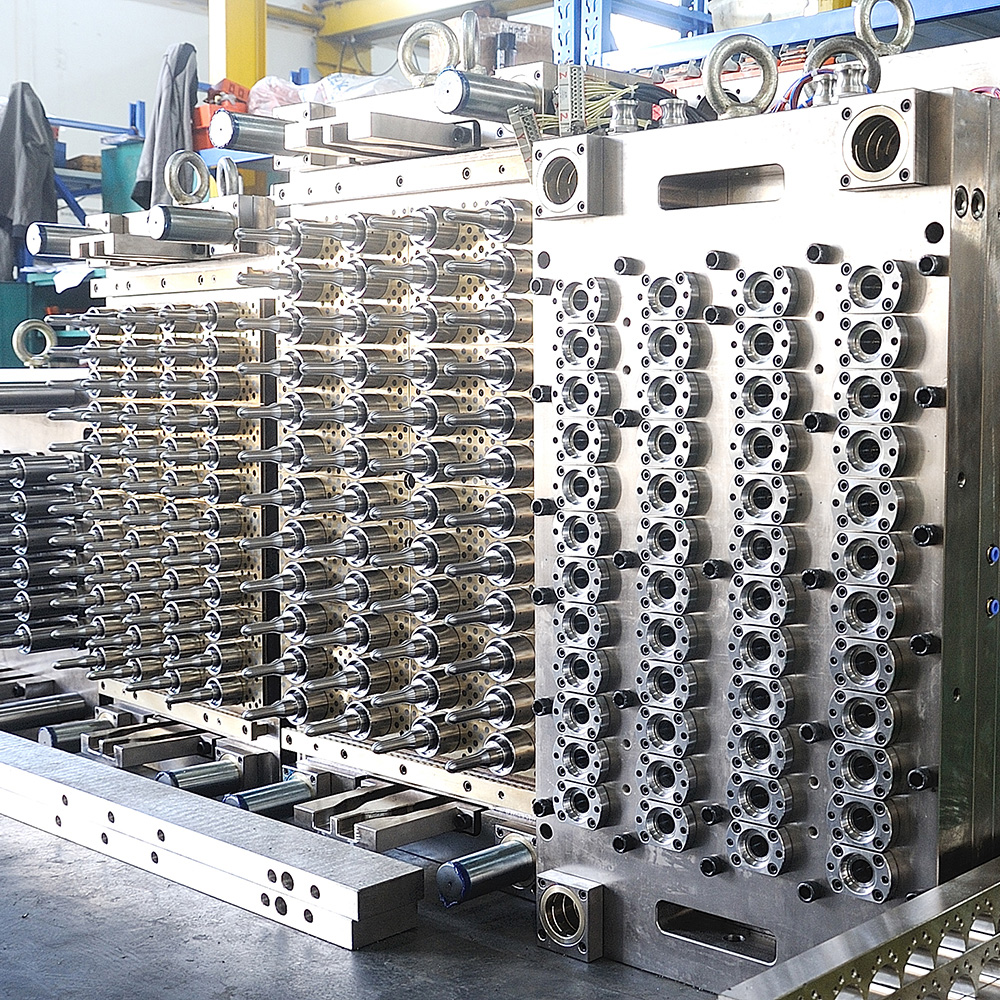
How to Design PET Preform Molds for Lightweight Preforms: Key Technical Considerations
An Advanced Technical Engineering Guide by pet-molds (PET-MOLDS CO., LTD.)
Executive Summary
In the global packaging sector, sustainable manufacturing and cost reduction are driving an aggressive industry-wide shift toward preform lightweighting. Shaving fractions of a gram off a standard PET preform yields massive annual resin savings for beverage brands, but it places extreme engineering demands on the injection mold tooling. As a premier Chinese manufacturer specializing in high-precision PET preform molds and integrated packaging tooling, pet-molds presents this comprehensive technical analysis. Here, we examine the core engineering variables required to design high-cavity molds capable of producing ultra-lightweight preforms without sacrificing top-load strength, barrier performance, or structural stability.
1. The Mechanical Challenges of Preform Lightweighting
When thinning the wall profile of a PET preform, the margin for error diminishes drastically. Traditional mold designs rely on thick walls to absorb variations in cooling and material flow. Lightweighting introduces three primary physical challenges:
- Core Shift and Eccentricity: Thinner walls mean tighter tolerances. Under massive injection pressures, core deflection must be tightly controlled to prevent uneven wall thickness, which leads to structural weak spots during the stretch blow-molding stage.
- Thermal Stresses and Acetaldehyde (AA) Control: Thinner sections require precise thermal management to ensure complete mold filling without increasing polymer residence time or generating excess acetaldehyde.
- Neck Finish and Closure Compatibility: Lightweighting often involves transitioning to short-neck standards. As professional closure mold solution experts, we ensure that the reduced neck profile maintains absolute dimensional harmony with matching caps to prevent leakage.
2. Key Technical Considerations in Mold Design
A. High-Rigidity Core and Cavity Alignment
To eliminate core shift during high-pressure injection, pet-molds utilizes premium vacuum-hardened S136 stainless steel (DIN 1.2083, heat-treated to HRC 48-52). Our molds feature precision interlocking taper alignments between the core and cavity inserts, maintaining wall thickness eccentricity tolerances within strict limits (≤ 0.05 mm).
B. Advanced Conformal Cooling Integration
Lightweight preforms cool faster, but uneven heat extraction causes warping and crystalline haze. By integrating 3D conformal cooling channels that closely mirror the geometry of the preform dome and body, we achieve rapid, uniform heat dissipation, reducing overall cycle times by up to 20%.
C. Balanced Valve-Gate Hot Runner Architecture
A computer-optimized, pneumatically actuated valve-gated hot runner system is essential for lightweight preforms. It eliminates stringing, controls gate vestige to under 1.0mm, and guarantees balanced melt distribution across high-cavity configurations (such as 48, 72, or 96 cavities).
3. Comparative Performance Matrix
The technical differences between standard tooling and lightweight-optimized mold engineering are outlined below:
| Engineering Factor | Standard Preform Mold Design | pet-molds Lightweight Custom Design |
|---|---|---|
| Preform Wall Tolerance | Standard commercial variance | Ultra-high concentricity (≤ 0.05 mm eccentricity) |
| Cooling Technology | Linear drilled cooling lines | 3D conformal and spiral cooling channels |
| Material & Hardness | Standard pre-hardened steel | Vacuum-hardened S136 stainless steel (HRC 48-52) |
| Closure Integration | Isolated preform focus | Holistic preform and cap interface engineering |
4. Why pet-molds is Your Trusted Tooling Partner
Achieving successful lightweighting requires a deep understanding of the entire packaging ecosystem. At pet-molds, our dual expertise as a premier PET preform mold manufacturer and a professional closure mold solution expert ensures that your lightweight preforms and caps work together flawlessly. We evaluate your machine clamping tonnage, resin properties, and target bottle specifications to deliver a robust, high-output production system.
Contact the engineering division at pet-molds today to discuss your next lightweight preform tooling project and maximize your plant's profitability.