
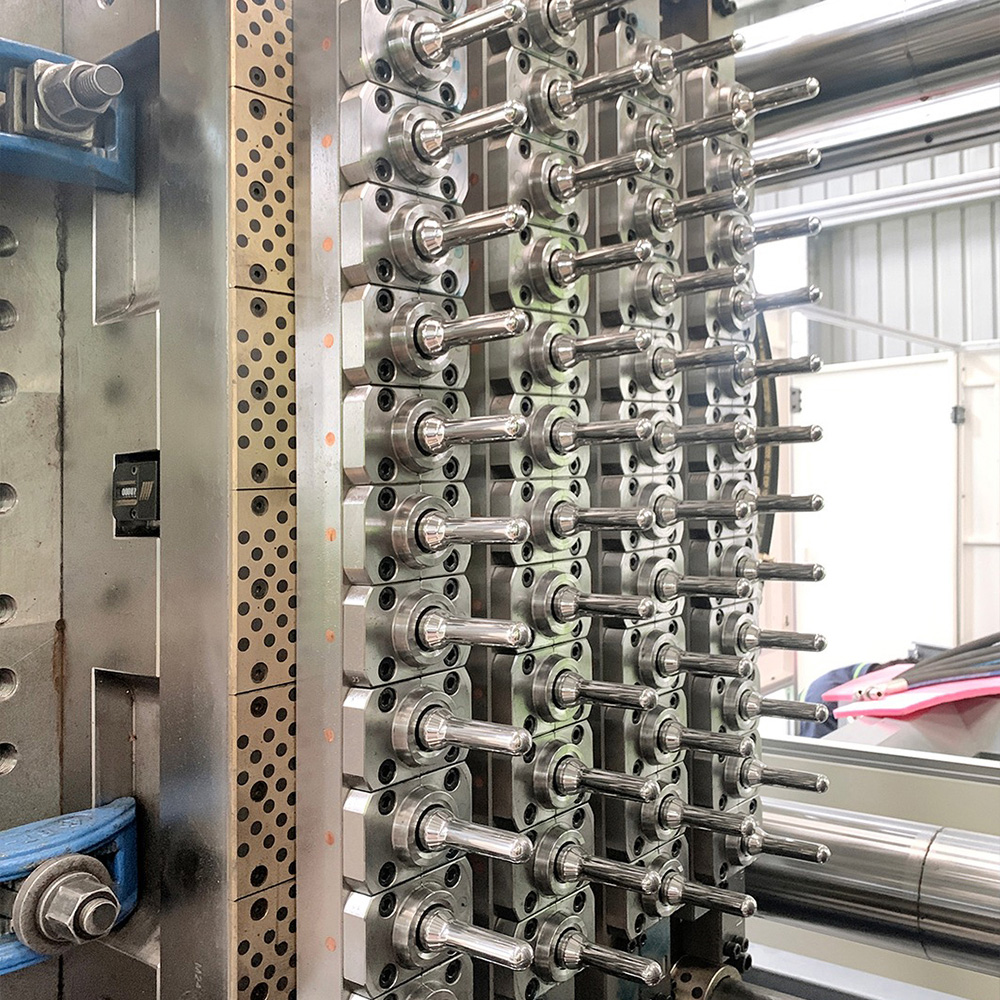
How Mold Flow Analysis (Moldflow) Optimizes Preform Design Before Steel Is Cut
An Advanced Simulation Engineering Guide by pet-molds (PET-MOLDS CO., LTD.)
Executive Summary
In high-precision injection molding, the cost of modifying hardened tool steel after manufacturing has begun can be financially devastating and severely delay project timelines. For high-cavity PET preform molds, predicting polymer behavior under intense pressure and thermal gradients is essential. As a premier Chinese manufacturer of advanced preform and closure tooling, pet-molds utilizes state-of-the-art Mold Flow Analysis (Moldflow) software during the preliminary engineering phase. This technical article explores how computer-aided rheological simulation optimizes preform wall profiles, balances hot runner manifolds, and eliminates structural defects before a single block of steel is cut.
1. The Critical Role of Simulation in Preform Engineering
PET (Polyethylene Terephthalate) is a sensitive engineering thermoplastic characterized by a narrow processing window and high sensitivity to thermal history and shear rates. When designing a 48, 72, or 96+ cavity mold, minor discrepancies in runner sizing or gate geometry can result in catastrophic variations across cavities. Mold Flow Analysis simulates the entire injection cycle digitally, allowing engineers to visualize melt front progression, pressure drops, and cooling dynamics before committing to expensive S136 stainless steel machining.
2. Key Parameters Analyzed During Moldflow Simulation
A. Melt Front Progression and Shear Balance
Simulating the filling phase ensures that molten PET reaches the end of the preform core simultaneously across all cavities. By achieving a perfectly balanced natural or artificial hot runner layout, Moldflow prevents premature freezing, short shots, and localized density variations.
B. Core Deflection and Wall Thickness Eccentricity
During injection, high polymer pressure creates lateral forces that can deflect the core pin, leading to uneven wall thickness (eccentricity) in the final preform. Moldflow calculates pressure differentials around the core, allowing pet-molds to adjust steel rigidity and core-to-cavity lock tolerances to maintain concentricity within strict limits (≤ 0.05 mm).
C. Acetaldehyde (AA) Generation and Residence Time
Excessive thermal residence time inside dead zones of the hot runner manifold triggers polymer degradation and Acetaldehyde generation, which ruins the taste of bottled water. Flow simulation identifies stagnant areas in runner channels, enabling engineers to streamline geometry and suppress AA formation.
3. Comparative Efficiency: Simulated Design vs. Traditional Trial-and-Error
The operational benefits of integrating Moldflow simulation into preform tooling development are outlined below:
| Development Phase | Traditional Trial-and-Error Method | pet-molds Moldflow Optimized Process |
|---|---|---|
| Tooling Prototype Iterations | Multiple costly steel re-machining cycles | Zero-steel virtual iterations via digital simulation |
| Time-to-Market | Extended due to physical sample tuning | Accelerated development and rapid client sign-off |
| Cavity Fill Consistency | Prone to outer cavity starvation | Balanced melt flow across 72+ cavities (±1% variance) |
| Preform Quality & Yield | High initial scrap rates | Right-first-time manufacturing with < 0.1% defect rate |
4. Synergy with Professional Closure Tooling Solutions
As professional closure mold solution experts, pet-molds understands that preform simulation must account for downstream bottle-blowing and capping requirements. The thread profile and neck finish simulated during the preform design stage are engineered in absolute harmony with our matching cap molds. This holistic simulation approach guarantees that preform shrinkage rates and thread dimensions match capping line tolerances perfectly, preventing torque leaks and production jams.
Conclusion
Mold Flow Analysis bridges the gap between theoretical design and physical manufacturing perfection. By predicting rheological behavior, thermal distribution, and mechanical stress prior to steel cutting, pet-molds delivers ultra-reliable, high-cavity tooling that guarantees maximum uptime and flawless preform quality.
Partner with pet-molds, your trusted high-precision mold maker and professional closure mold solution expert, to engineer your packaging production line with absolute confidence.