
How Much Does a High-Cavity PET Preform Mold Really Cost? Full Price Breakdown for 2026
An Industry Financial & Technical Pricing Guide by pet-molds (PET-MOLDS CO., LTD.)
Executive Summary
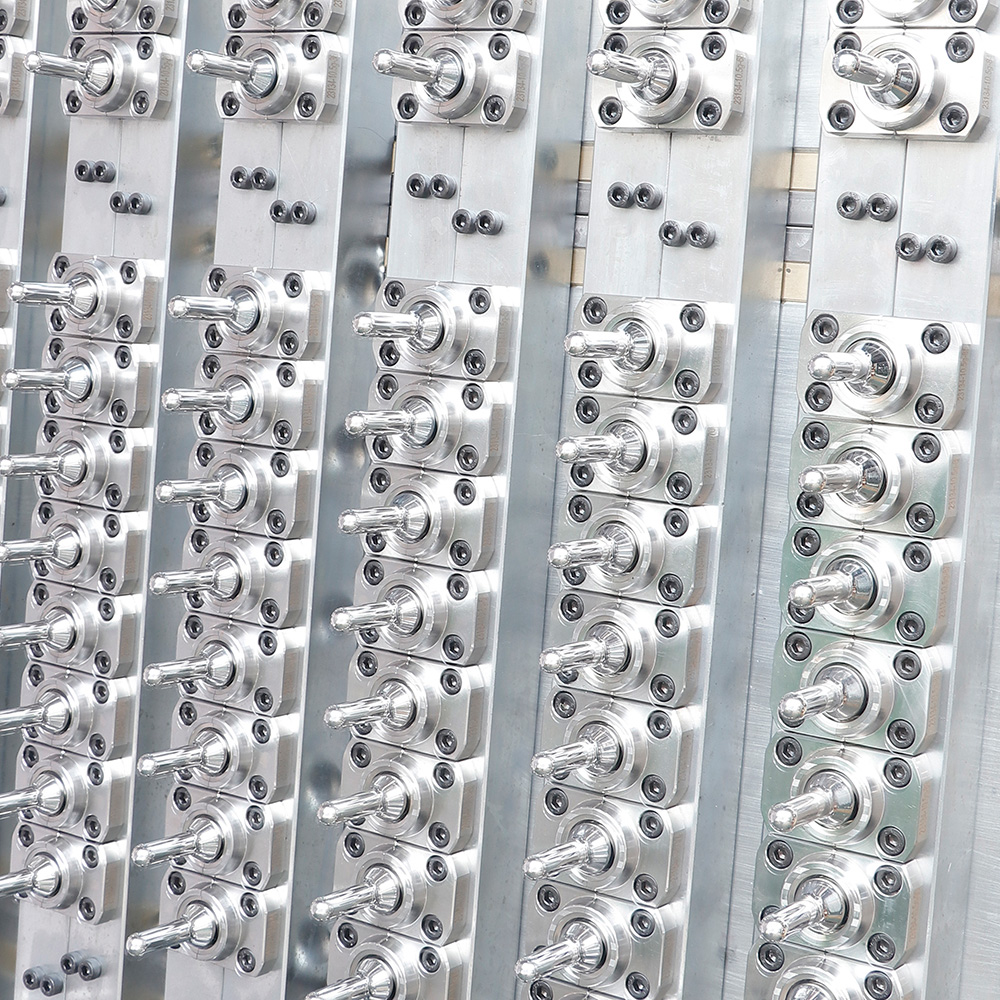
Investing in a high-cavity PET preform mold is one of the most substantial capital expenditure (CapEx) decisions a beverage packaging company will make. When sourcing molds from international manufacturers, buyers are often met with wide price disparities, leaving them to wonder what separates a $40,000 tooling package from a $150,000 system. As a premier Chinese manufacturer of high-precision preform and closure tooling, pet-molds presents a transparent, comprehensive price breakdown for 2026. This technical analysis explores the core cost drivers, material grades, hot runner systems, and long-term return on investment (ROI) associated with high-cavity mold procurement.
1. General Price Ranges by Cavitation Scale (2026 Market Standard)
The upfront cost of a PET preform mold scales primarily with its cavitation count, mechanical complexity, and hot runner architecture. Below is the current global market pricing matrix for industrial-grade systems:
| Cavity Count | Target Production Volume | Estimated Price Range (USD) |
|---|---|---|
| 16 to 24 Cavities | Regional or niche bottling; startup lines | $25,000 - $45,000 |
| 48 Cavities | Medium-volume commercial beverage lines | $65,000 - $95,000 |
| 72 to 96+ Cavities | High-speed industrial mass production | $110,000 - $180,000+ |
2. Core Cost Drivers: What Am I Actually Paying For?
Understanding where your capital goes helps distinguish cheap, short-lived tooling from high-performance engineering investments:
A. Steel Metallurgy (S136 vs. P20)
The choice of mold steel accounts for a significant portion of raw material costs. Using vacuum-hardened S136 stainless steel (DIN 1.2083, heat-treated to HRC 48-52) increases upfront material costs compared to soft P20 steel, but it guarantees corrosion resistance and a tooling lifespan exceeding 4 to 5 million cycles.
B. Hot Runner System and Valve-Gate Technology
The hot runner manifold is the "heart" of a high-cavity mold. Premium thermal-balanced manifolds with individual pneumatic valve gates command higher prices than basic open-nozzle systems, but they are essential for eliminating stringing, keeping gate vestiges under 1.0mm, and preventing Acetaldehyde (AA) generation.
C. Advanced Cooling Architecture
Integrating 3D conformal cooling channels requires specialized CNC machining and DMLS technology. While it adds to initial tooling expenses, it slashes cycle times by up to 25%, drastically lowering long-term production costs per preform.
3. Total Cost of Ownership (TCO) vs. Initial Upfront Price
A low-cost mold often translates into hidden operational expenses, including frequent maintenance downtime, high scrap rates due to wall eccentricity (> 0.10 mm), and early structural fatigue. In contrast, an engineered system from pet-molds minimizes reject rates to under 0.1% and delivers full CapEx payback through optimized cycle efficiency within 8 to 12 months.
4. The Value of Integrated Closure Tooling Expertise
As professional closure mold solution experts, pet-molds provides complete packaging harmony. When you procure a preform mold, ensuring that the neck thread profile matches your exact closure specifications prevents costly capping leaks and line jams down the road. Our holistic design approach protects your entire packaging supply chain.
Conclusion
When budgeting for a PET preform mold in 2026, evaluate tooling through the lens of long-term reliability, cycle speed, and part precision rather than initial sticker price. Partner with pet-molds to secure transparent pricing, superior S136 stainless steel construction, and expert engineering tailored to your plant floor.