
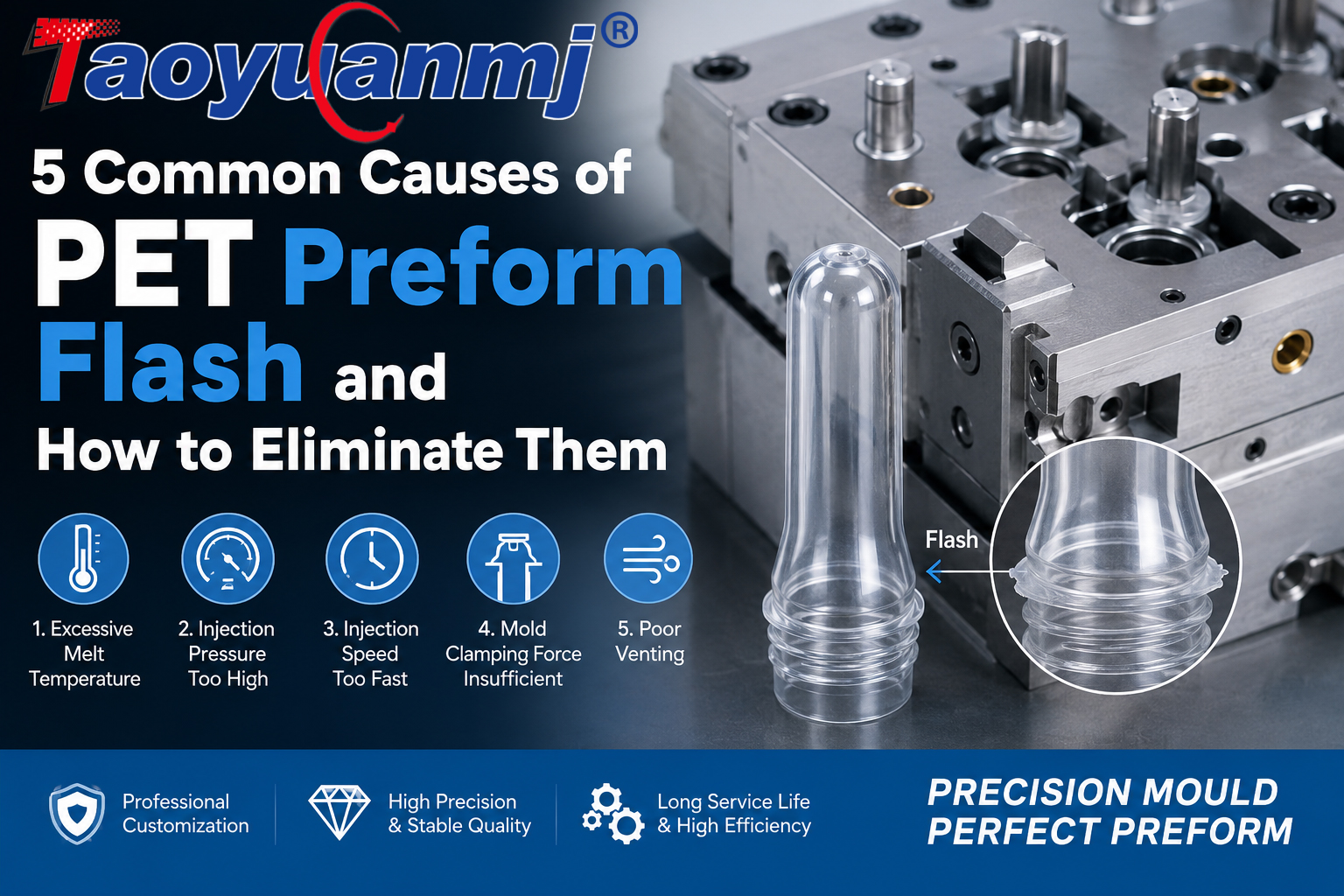
5 Common Causes of PET Preform Flash and How to Eliminate Them
In high-speed PET preform injection molding, maintaining zero-defect production is essential for cost control and blow-molding efficiency. Among common quality defects, flash (excess thin plastic protruding from the parting line, neck finish, or mold parting surfaces) is one of the most frustrating challenges. Flash not only ruins the appearance of preforms but also interferes with the neck sealing area, causing bottle blowing leaks or damaging blow mold cavities.
As a leading custom PET preform mould manufacturer, Taoyuan Mould brings years of precision engineering experience to help global bottle manufacturers eliminate molding flaws. In this guide, our technical experts analyze the 5 primary root causes of PET preform flash and provide practical engineering solutions to ensure seamless, high-efficiency production.
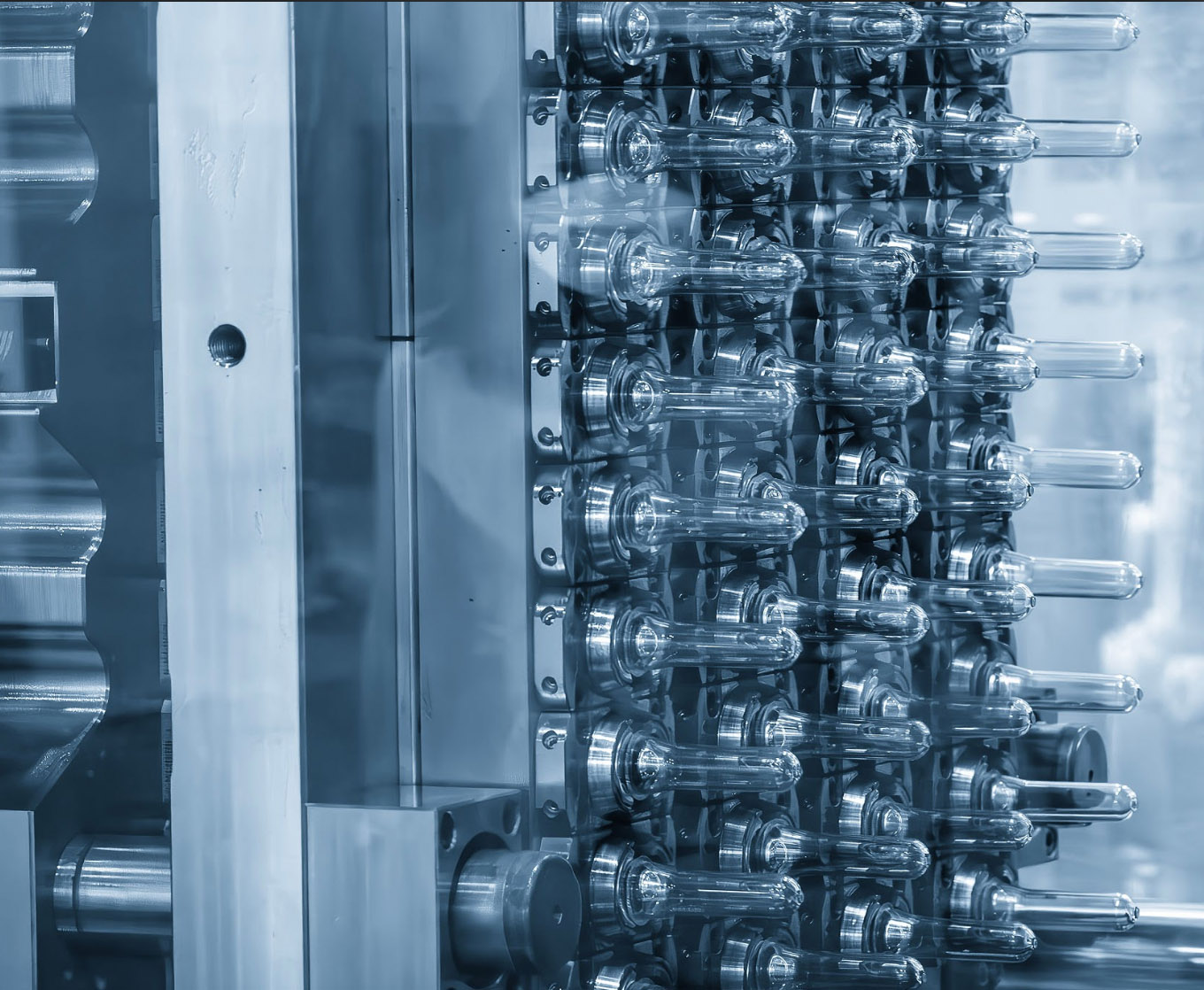
Top 5 Causes of PET Preform Flash and Practical Fixes
1. Insufficient Clamping Force or Machine Wear
The Problem: During the high-pressure injection phase, molten PET resin generates extreme internal cavity pressure. If the injection molding machine's clamping force is lower than the cavity pressure, the parting line opens micro-gaps, allowing plastic to seep out and form flash.
How to Eliminate It:
- Recalculate Clamping Force: Ensure your machine clamping tonnage matches the total projected cavity area multiplied by the required cavity pressure.
- Check Machine Platen Parallelism: Uneven clamping force distribution across tie-bars will leave certain mold areas inadequately pressed. Regularly inspect tie-bar tension and platen alignment.
2. Wear, Damage, or Debris on Mold Parting Lines
The Problem: Continuous high-speed cycling, poor maintenance, or crushed plastic debris on parting surfaces can deform the steel mating faces. Even a gap larger than 0.015–0.02 mm can allow PET melt to escape.
How to Eliminate It:
- Routine Cleaning: Clean parting lines and neck splits every shift using non-abrasive brass scrapers and specialized mold cleaners.
- Choose High-Hardness Steel: Partner with professional mold makers like Taoyuan Mould who use premium corrosion-resistant hardened steels (e.g., S136, 2316 hardened to HRC 48-52) with high precision CNC grinding to prevent deformation under heavy load.
3. Improper Process Parameters (Over-Injection & Excessive Pressure)
The Problem: Setting the injection volume too high, holding pressure too long, or using excessively high injection speeds forces excess material into sealed cavities, pushing parting faces apart.
How to Eliminate It:
- Optimize V/P Switchover Point: Transition from injection to holding pressure at 95–98% volumetric cavity filling.
- Fine-Tune Packing Pressure: Step down holding pressure incrementally. Apply just enough packing pressure to eliminate sink marks without overpacking the gate or neck split area.
4. Excessive Melt or Hot Runner Temperature
The Problem: PET resin exhibits shear-thinning behavior. When barrel or hot runner nozzle temperatures are set too high, the melt viscosity drops drastically. Ultra-low viscosity resin easily penetrates micro-clearances around neck splits and valve gates, forming thin, sharp flash.
How to Eliminate It:
- Lower Temperature Profiles: Gradually lower hot runner and barrel heating zone temperatures by 3–5°C while monitoring pressure levels.
- Verify Hot Runner Balance: Ensure your hot runner temperature controller provides precise individual zone control. Taoyuan Mould's hot runner systems feature balanced thermal distribution to prevent localized overheating.
5. Misaligned Core, Cavity, or Neck Split Components
The Problem: Complex multi-cavity PET moulds rely on precise centering mechanisms. Worn guide pins, loose taper locks, or incorrect alignment between the core and cavity inserts create uneven parting line pressure and localized flash, especially along the neck thread area.
How to Eliminate It:
- Inspect Guide Components: Replace worn guide bushings, wear plates, and taper locks promptly.
- Precision Alignment Design: High-quality moulds utilize double-taper positioning and self-locking features to ensure perfect concentricity across every cavity cycle after cycle.
Quick Diagnostic Checklist for PET Preform Flash
| Observed Flash Location | Likely Root Cause | Immediate Action |
|---|---|---|
| Along the Main Parting Line | Low clamping force / Over-injection | Increase clamp tonnage or adjust V/P switchover point |
| Around Neck Finish / Thread Area | Worn neck splits / High melt temperature | Inspect neck ring inserts & lower hot runner temperature |
| Near Gate / Valve Pin Area | Valve stem wear / High packing pressure | Check valve pin alignment or decrease holding pressure |
Why Partner with Taoyuan Mould for PET Solutions?
At Taoyuan Mould, we understand that downtime and defect rates directly hit your profitability. As a specialized manufacturer of multi-cavity PET preform moulds, we integrate advanced thermal balance runner designs, premium Swiss/Japanese CNC machining accuracy (within ±0.005mm), and durable hardened steels to eliminate flash problems from the mold design stage itself.
Whether you need custom bottle preform designs, fast cycle-time optimizations, or complete mould maintenance support, our technical experts are ready to elevate your molding efficiency.