
PET Resin Drying and Processing: Critical Steps for Defect-Free Preform Molding
An Advanced Technical Materials Guide by pet-molds (PET-MOLDS CO., LTD.)
Executive Summary
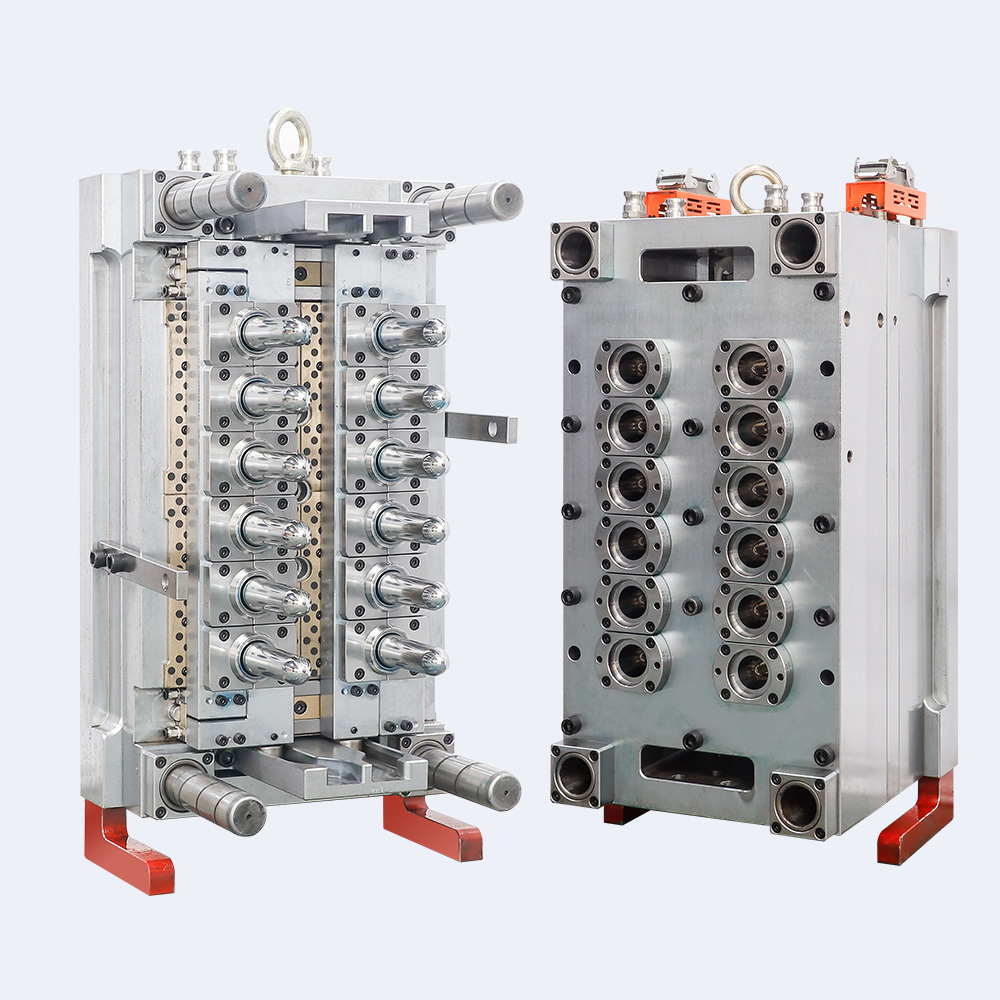
In high-speed PET preform injection molding, tooling engineering and mold design represent only half the battle. Even the most advanced, high-cavity PET preform mold equipped with vacuum-hardened S136 stainless steel and conformal cooling will fail to produce acceptable parts if raw material preparation is flawed. Polyethylene Terephthalate (PET) is a highly hygroscopic polymer that readily absorbs atmospheric moisture. As a premier Chinese manufacturer of precision preform tooling and an industry-recognized professional closure mold solution expert, pet-molds presents this comprehensive technical guide on PET resin drying and processing parameters required to eliminate surface defects, prevent intrinsic viscosity (IV) drop, and ensure pristine container quality.
1. The Hygroscopic Nature of PET and the Danger of Moisture
Raw PET pellets typically contain between 0.1% and 0.2% surface moisture upon delivery. When heated to processing temperatures of 275°C to 290°C inside the injection barrel, residual moisture triggers a chemical reaction known as hydrolytic degradation. This moisture breaks down the polymer chains, leading to a drastic drop in intrinsic viscosity (IV), loss of mechanical strength, stress cracking in blown bottles, and the formation of visual defects such as silver streaks and excessive acetaldehyde (AA).
2. Critical Drying Parameters and Protocol
To prevent polymer breakdown, PET resin must undergo rigorous dehumidifying drying prior to entering the injection molding machine throat. Best-practice industrial parameters include:
- Target Moisture Content: Must be strictly maintained below 0.005% (50 ppm).
- Drying Temperature: Maintained consistently between 160°C and 180°C using desiccant air dryers.
- Residence Time: Resin must be dried for a minimum of 4 to 6 hours in a continuous-flow hopper dryer.
- Dew Point Control: The drying air dew point must be kept at -40°C or lower to ensure effective moisture extraction from the pellet core.
3. Processing Parameters and Thermal Control Matrix
Once dried, the polymer enters the barrel and hot runner system. Maintaining stable processing conditions is essential for defect-free preform manufacturing:
| Processing Variable | Recommended Operational Standard | Impact on Preform Quality |
|---|---|---|
| Barrel Temperature Profile | 275°C - 290°C (Graduated zones) | Prevents localized overheating and thermal degradation. |
| Hot Runner Temperature | ± 0.5°C PID closed-loop control | Suppresses Acetaldehyde (AA) generation and melt stagnation. |
| Injection Speed Profile | Multi-stage programmable flow | Eliminates shear stress, flow marks, and short shots. |
| Mold Cooling Temperature | 8°C - 12°C chilled water circuit | Ensures rapid heat extraction and optical clarity (zero haze). |
4. The Synergy Between Material Preparation and Closure Tooling
At pet-molds, our extensive expertise as professional closure mold solution experts highlights the direct relationship between preform processing and capping performance. If PET resin is improperly dried, internal molecular degradation weakens the preform neck finish. During capping, deformed or weakened threads fail to maintain torque, resulting in liquid leakage on high-speed bottling lines. Ensuring proper resin drying preserves the dimensional stability of the preform neck thread, guaranteeing a seamless, leak-proof interface with our matching cap molds.
5. Conclusion
Mastering PET preform manufacturing requires absolute control over both material preparation and tooling architecture. By maintaining strict resin drying protocols and utilizing high-cavity molds engineered by pet-molds, packaging plants can eliminate defects, maximize throughput, and achieve superior container integrity.
Partner with pet-molds, your trusted Chinese preform mold manufacturer and professional closure mold solution expert, to optimize your entire packaging production ecosystem.