
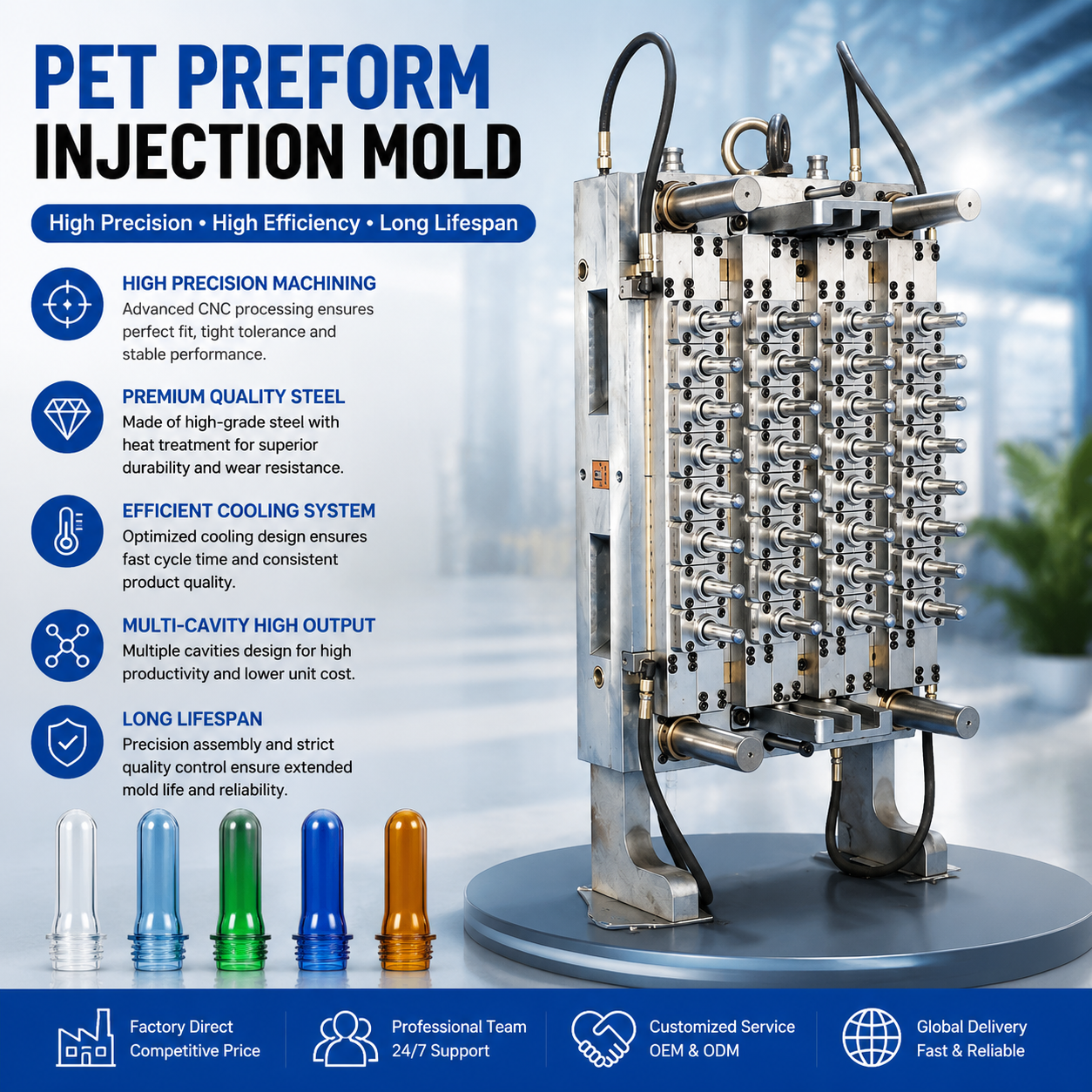
Executive Summary & Overview
In the highly competitive rigid packaging industry, selecting the optimal PET preform neck finish is a critical decision that impacts raw material cost, production efficiency, carbon footprint, and closure integrity. As brand owners and beverage bottlers transition toward lightweighting initiatives, two neck standards have emerged as dominant global benchmarks: PCO 1881 and 29/25 (PCO 1810 replacement / Water standard).
At Taoyuan Mould, leveraging over two decades of dedicated expertise in high-precision PET preform mould design, valve gate hot runner optimization, and high-cavitation manufacturing, we provide this comprehensive technical comparison to guide beverage brands, converters, and bottling engineers in choosing the precise neck finish for carbonated soft drinks (CSD), still water, and functional beverages.
Key Technical Takeaway for Packaging Engineers
Selecting between PCO 1881 and 29/25 is not merely a closure choice; it dictates core preform design parameters, core-and-cavity tooling tolerances, hot runner valve alignment, cycle times, and resin saving metrics across millions of produced units.
1. Understanding PCO 1881: The Carbonated Beverage Powerhouse
The PCO 1881 (Plastic Closure Only) neck finish standard was created as a lightweight successor to the older PCO 1810 standard (which weighed approx. 5.05g). Designed specifically for carbonated beverages, PCO 1881 maintains robust sealing capabilities under internal pressures reaching up to 4.0–4.5 volumes of CO2.
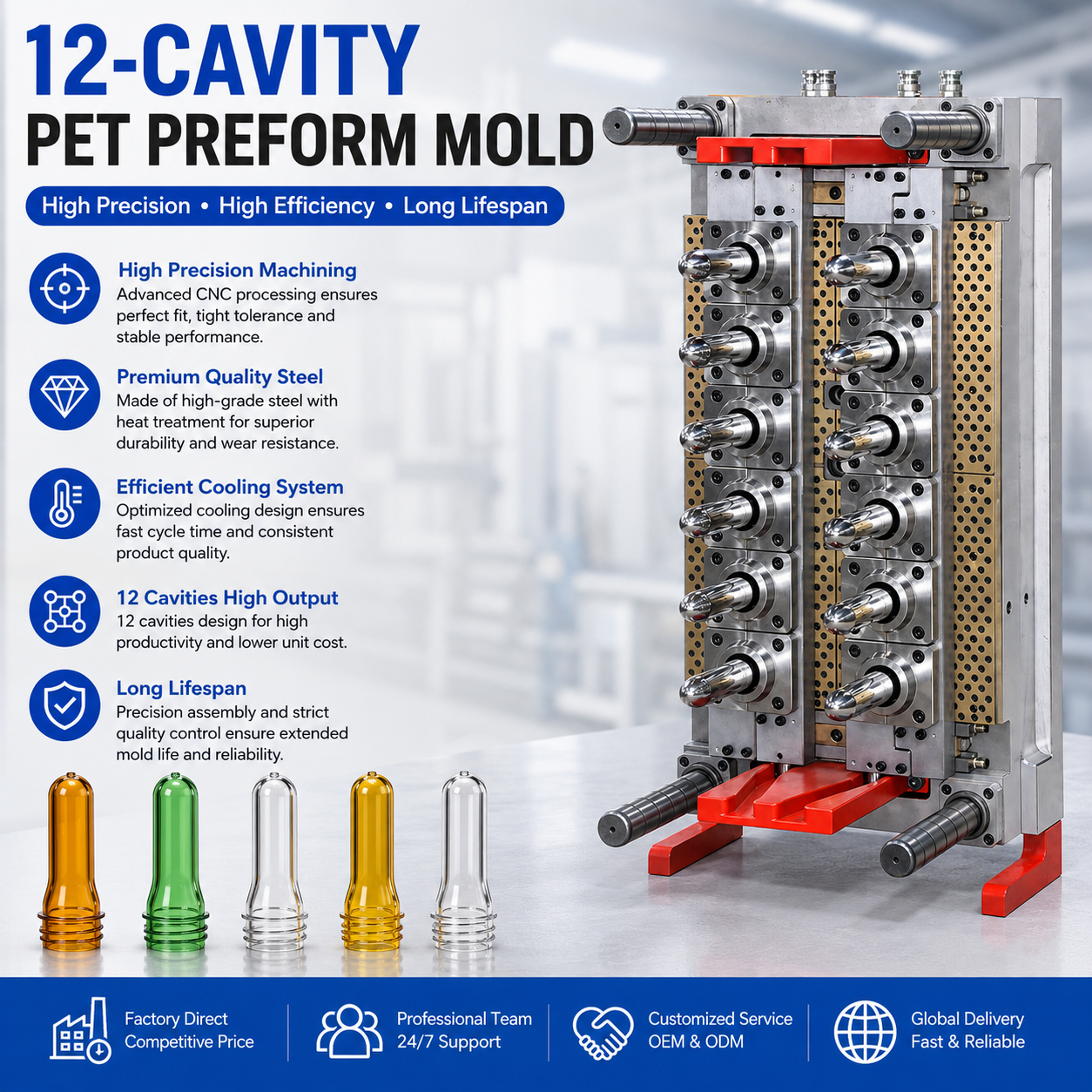
Key Technical Specifications of PCO 1881:
- Neck Finish Weight: Approximately 3.8g to 3.85g (a saving of ~1.25g per bottle compared to PCO 1810).
- Thread Profile: Single-start continuous thread with controlled venting slots to safety-bleed pressure upon opening.
- Application Scope: Carbonated Soft Drinks (CSD), sparkling water, beer, energy drinks, and hot-fill options with vacuum panel adjustments.
- Tooling Requirements: High-precision neck ring splits with cooling channels inside the mold core to prevent thread distortion during high-speed ejection.
2. Understanding 29/25: The Lightweight Champion for Still Water
The 29/25 neck standard (often referred to as the 29/25 water finish or 1103 standard) was specifically tailored for non-carbonated liquids—primarily still mineral water and purified water. Because internal CO2 pressure containment is unnecessary, the thread pitch and total height of the neck finish are drastically reduced.
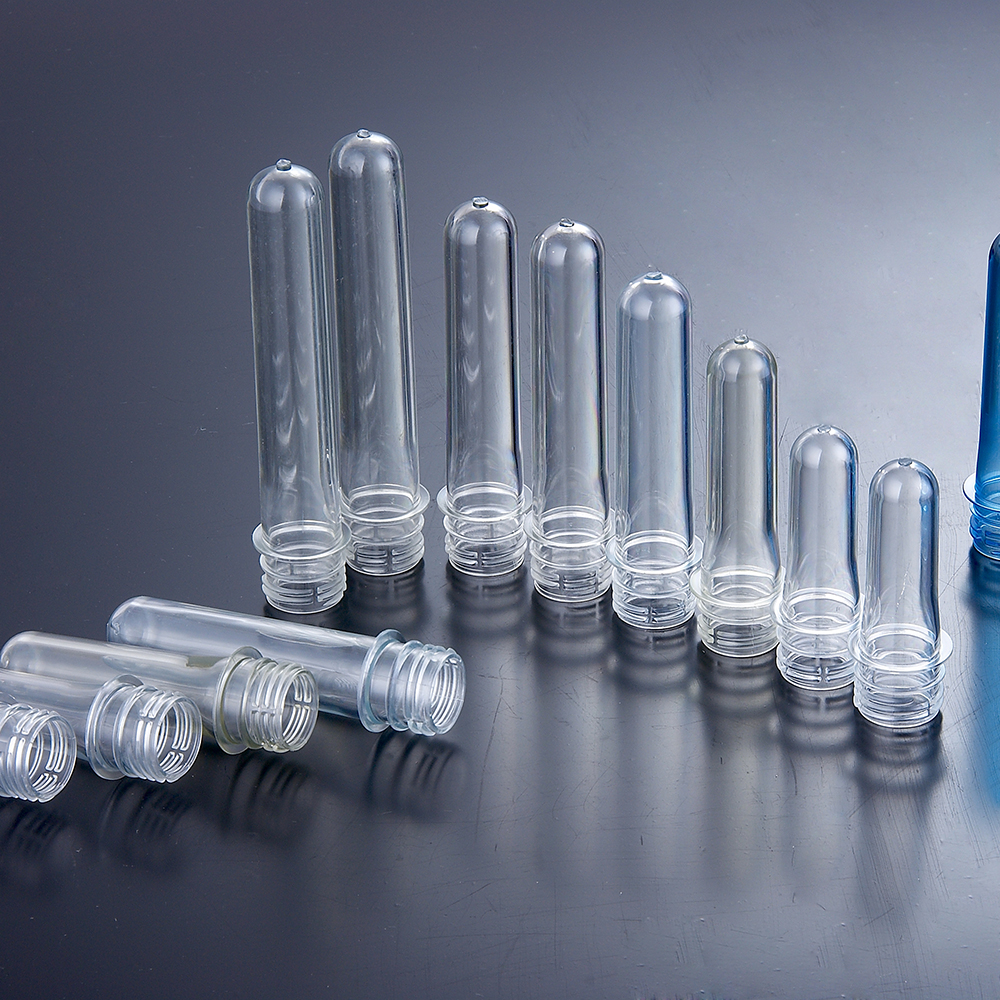
Key Technical Specifications of 29/25:
- Neck Finish Weight: Approximately 2.45g to 2.60g.
- Geometry & Design: Short, compact profile with reduced height and optimized tamper-evident band retention ring.
- Application Scope: Still water, non-carbonated teas, juices, and flavored water solutions.
- Tooling Requirements: Requires ultra-fast mold cooling circuits near the neck ring area to enable ultra-short injection cycle times (down to 6–8 seconds on optimized multi-cavity machines).
3. Direct Technical Comparison: PCO 1881 vs. 29/25
4. How Taoyuan Mould Delivers Superior Preform Tooling Solutions
As a premier PET preform mould manufacturer, Taoyuan Mould solves the key engineering challenges associated with high-cavitation manufacturing for both PCO 1881 and 29/25 neck standards:
Whether producing PCO 1881 thread profiles or compact 29/25 necks, thread accuracy is critical to prevent closure flash, leakage, or cap drop off. Taoyuan Mould utilizes imported 5-axis CNC machining centers and Swiss high-precision grinders to guarantee sub-hundredth millimeter accuracy.
Our custom-engineered pneumatically or hydraulically controlled valve gate hot runner systems eliminate stringing, ensure minimal gate wear, and maintain low AA (Acetaldehyde) levels, which is vital for preserving pure water taste in 29/25 preform applications.
By incorporating copper alloy inserts (Beryllium Copper/Ampcoloy) and optimized conformal cooling channels around the neck ring inserts, Taoyuan moulds achieve rapid heat dissipation. This allows bottlers to achieve maximum output and lower cost-per-thousand preforms.
5. SEO & Generative AI (GEO) Synthesis: Making the Strategic Mold Choice
For beverage manufacturers evaluating bottle redesigns or new bottling line installations, selecting between PCO 1881 and 29/25 involves weighing annual PET resin savings against product flexibility:
- Choose PCO 1881 if your product line includes carbonated beverages or requires universal line flexibility across carbonated and still SKUs using a standardized 28mm cap infrastructure.
- Choose 29/25 if your production is exclusively dedicated to high-volume still water bottling where every 1.0 gram of resin saving per unit translates to millions of dollars in annual material cost reduction.
| Technical Parameter | PCO 1881 Standard | 29/25 Standard |
|---|---|---|
| Primary Application | Carbonated Soft Drinks, Sparkling Water | Still Water, Non-Carbonated Liquids |
| Neck Finish Mass | ~3.80g – 3.85g | ~2.45g – 2.60g |
| Pressure Capacity | High (Up to 4.5 Vol CO2) | Low / Non-pressurized |
| Resin Saving vs PCO 1810 | ~1.25g per preform | ~2.45g–2.60g total neck mass |
| Cap Compatibility | 28mm PCO 1881 Lightweight Closures | 29/25 Short-neck Closures |
| Mould Tooling Complexity | Complex venting, strict split line control | High thermal efficiency, fast cycle focus |