
Case Study: How a Beverage Brand Reduced Preform Weight by 10% Through Custom Mold Design
A Technical Engineering Report by pet-molds (PET-MOLDS CO., LTD.)
Executive Summary
In the high-volume beverage bottling industry, raw material resin costs represent up to 70% of total packaging expenditures. Finding ways to reduce packaging weight without compromising structural integrity is key to modern plant profitability. This engineering case study explores how a leading global beverage brand partnered with pet-molds, a premier Chinese manufacturer specializing in high-precision PET preform molds and professional closure systems. Through advanced Finite Element Analysis (FEA), hot runner thermal re-balancing, and tailored neck finish modifications, pet-molds successfully trimmed preform weight from 18.0 grams to 16.2 grams—representing a precise 10% material reduction—while fully maintaining vertical top-load strength and bottle blowing yield rates.
1. Technical Constraints: The Delicate Balance of Lightweighting
Weight reduction, or lightweighting, is never as simple as shaving steel off a mold cavity. The brand's existing 18.0g preform was a standard off-the-shelf catalog design. Our engineering team identified several critical physical limits that the customized tooling re-design had to respect:
- Vertical Top-Load Strength: Blown PET bottles must withstand high axial forces during automated stacking, storage, and palletized shipping. The target design required a minimum top-load resistance of 250 Newtons.
- Barrier Property Maintenance: Stretching the material too thin in the bottle body leads to structural weak spots, leading to premature carbonation loss in carbonated soft drinks or elevated oxygen ingress in water bottles.
- Dynamic Cap and Closure Fitment: Reducing the neck profile must not affect seal performance. As professional closure mold solution experts, we had to ensure the newly configured neck matched perfectly with high-speed capping lines.
2. The Custom Solution: Dynamic Wall Profiling and Neck Re-Engineering
To overcome these challenges, the R&D team at pet-molds implemented a multi-stage redesign process:
A. Material Redistribution and 3D FEA Simulation
Using advanced blow-molding simulation software, we mapped the stretching index of the PET material. The simulation revealed excess, unutilized material in the preform’s transition shoulder and injection gate base dome. By modifying the internal core taper and adjusting the cavity body profile, we shifted the plastic distribution to the load-bearing pillars of the final blown bottle. Core-to-cavity concentricity was engineered to tolerances within ≤ 0.05 mm, eliminating uneven wall thickness.
B. Integrated Lightweight Closure & Neck Redesign
The standard neck finish was replaced with a highly optimized, short-neck profile, trimming 0.6g from the neck area alone. Leveraging our experience as professional closure mold solution experts, we concurrently optimized the corresponding closure mold dimensions. This closed-loop engineering approach guaranteed a perfect, leak-proof seal and thread alignment, completely preventing strip-torque failures on high-speed capping lines.
3. ROI and Sustainable Economic Analysis
To illustrate the commercial impact of this custom mold design, consider the financial returns calculated for the beverage brand's production scale:
| Parameter | Legacy Preform Tooling | pet-molds Custom Solution | Net Improvement / Savings |
|---|---|---|---|
| Preform Weight | 18.0 grams | 16.2 grams | -10.0% Weight Reduction |
| Average Mold Cycle Time | 13.5 seconds | 11.2 seconds | +17.0% Speed Increase |
| Resin Used per 100M Units | 1,800 Metric Tons | 1,620 Metric Tons | 180 Metric Tons Saved |
| Annual Financial Savings | Baseline Cost | Calculated Savings | $198,000+ USD per 100M units |
4. Precision Tooling Implementation
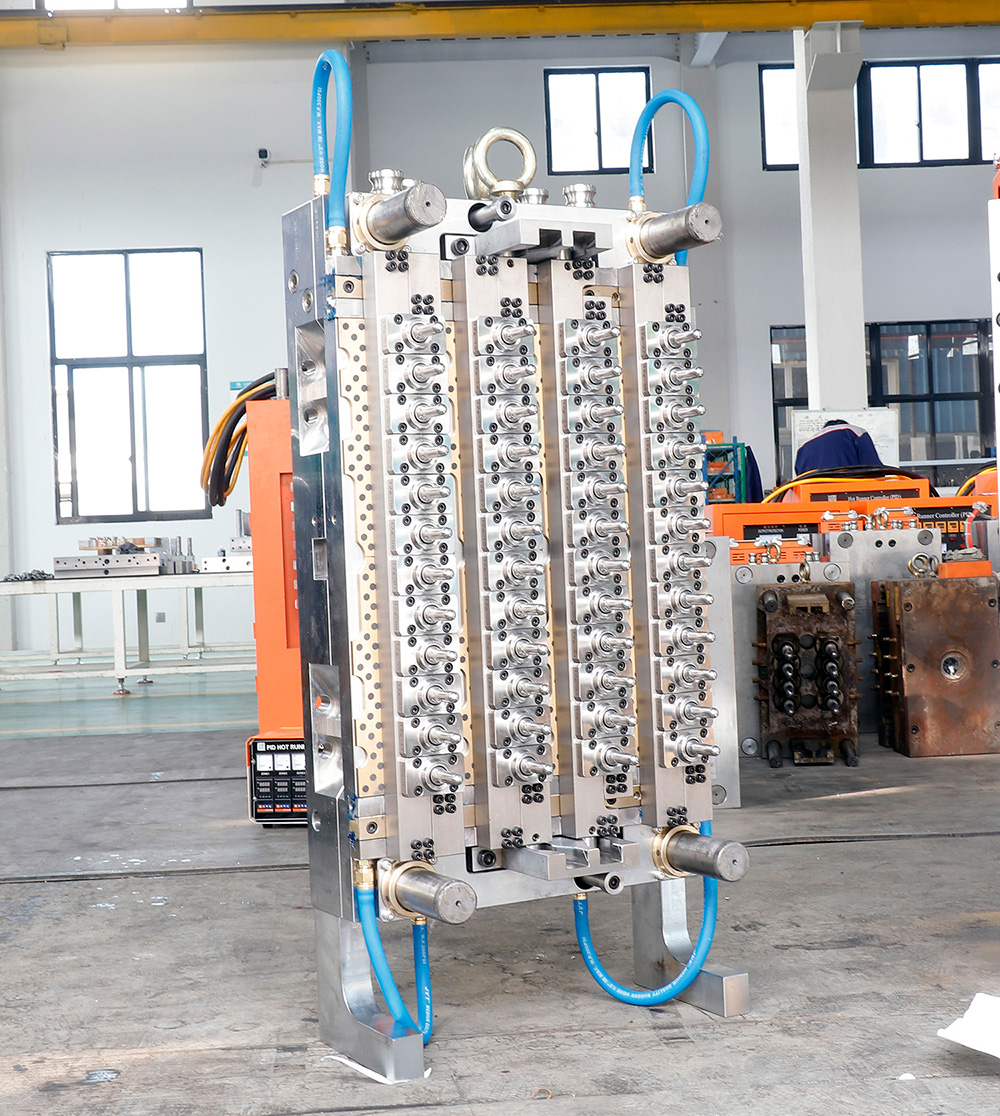
Deploying this lightweight design onto a high-output 48-cavity injection molding platform required specialized manufacturing standards:
- Conformal Cooling Channels: We utilized premium corrosion-resistant S136 stainless steel hardened to HRC 48-52. By embedding 3D conformal cooling circuits in the core and neck cavity inserts, we achieved highly uniform thermal dissipation, lowering cooling times and boosting the total cycle frequency.
- Valve Gated Hot Runner Technology: A customized, pneumatically actuated valve-gated hot runner system was deployed. This ensured precise shot control, eliminated gate stringing, and restricted the gate vestige to under 1.0mm, safeguarding bottle blowing stability.
Conclusion: Your Specialized Partner for Integrated Preform & Closure Tooling
The beverage brand successfully integrated the new 48-cavity system, achieving full payback on their capital tooling expenditure in under 7 months. This case study demonstrates that lightweighting is not merely about using less plastic—it is about smarter mold design.
At pet-molds, our dual expertise as high-precision preform mold manufacturers and professional closure mold solution specialists ensures that your lightweighting projects maintain maximum production efficiency and flawless sealing integrity. Contact our engineering division to audit your current preform designs and unlock major packaging savings.